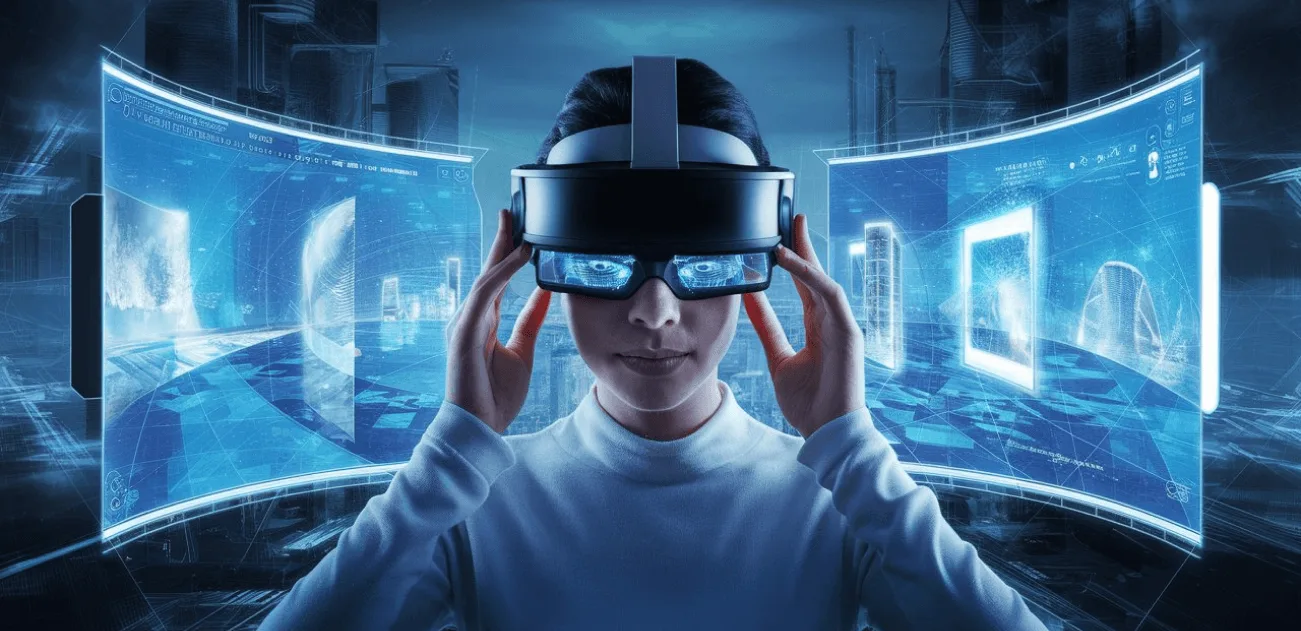
The Future is Spatial: How Spatial Computing is Redefining Digital Experiences.
Technology has continuously evolved from desktops to mobile devices, from touchscreens to voice assistants, and now toward a new frontier: Spatial Computing. As digital and physical worlds become increasingly interconnected, spatial technologies are transforming how people interact with information, products, services, and one another.
The phrase "The Future is Spatial" reflects a growing shift toward immersive, context-aware, and three-dimensional digital experiences that seamlessly blend into our everyday environments. Powered by technologies such as Augmented Reality (AR), Virtual Reality (VR), Mixed Reality (MR), Artificial Intelligence (AI), IoT, and advanced sensors, spatial computing is poised to become the next major computing platform.
What is Spatial Computing?
Spatial Computing refers to technology that enables computers to understand, interpret, and interact with the physical world in three dimensions. Instead of interacting with screens alone, users can engage with digital content that exists within their physical environment.
Spatial computing combines:
- Augmented Reality (AR)
- Virtual Reality (VR)
- Mixed Reality (MR)
- Artificial Intelligence (AI)
- Computer Vision
- IoT Devices and Sensors
- 3D Mapping and Modeling
- Real-Time Data Processing
The result is a more natural and intuitive way of interacting with digital information.
Why Spatial Computing Matters
Traditional computing confines digital experiences to screens. Spatial computing removes these boundaries by integrating digital content directly into physical spaces.
This transformation creates opportunities to:
- Improve productivity and collaboration
- Enhance learning and training
- Deliver immersive customer experiences
- Enable smarter cities and infrastructure
- Improve healthcare outcomes
- Revolutionize manufacturing and logistics
Spatial computing is not just a technological advancement—it's a fundamental shift in human-computer interaction.
Key Benefits of Spatial Computing
1. More Natural User Interactions
Users can interact through gestures, voice commands, eye tracking, and movement rather than relying solely on keyboards and touchscreens.
2. Enhanced Visualization
Complex information can be displayed in three dimensions, making it easier to understand designs, data, and processes.
3. Improved Collaboration
Remote teams can collaborate within shared virtual spaces, increasing engagement and productivity.
4. Better Decision-Making
Real-time contextual information helps users make informed decisions more quickly and accurately.
5. Increased Engagement
Immersive experiences create stronger emotional connections and improve user retention.
6. Personalized Experiences
Spatial systems can adapt digital content based on location, behavior, and environmental conditions.
Applications of Spatial Computing
Healthcare
Healthcare professionals can visualize patient anatomy in 3D, perform remote consultations, and enhance surgical planning.
Education and Training
Students can experience immersive learning environments, while employees can receive hands-on virtual training.
Retail and E-Commerce
Customers can virtually try products, preview furniture in their homes, or explore immersive shopping experiences.
Manufacturing
Engineers can use digital twins and AR-guided workflows to improve efficiency and reduce operational errors.
Architecture and Construction
Designers can visualize projects in real-world environments before construction begins.
Entertainment and Gaming
Spatial experiences create highly interactive games, virtual events, and immersive storytelling opportunities.
Smart Cities
Urban planners can use spatial data to optimize transportation, utilities, and public infrastructure.
The Role of Digital Twins
One of the most powerful components of spatial computing is the use of digital twins—virtual representations of physical objects, systems, or environments.
Digital twins enable organizations to:
- Monitor operations in real time
- Predict maintenance requirements
- Simulate future scenarios
- Improve resource utilization
- Enhance operational efficiency
As spatial computing evolves, digital twins will become increasingly valuable across industries.
Challenges Facing Spatial Computing
Despite its enormous potential, spatial computing faces several challenges:
Hardware Limitations
Devices must become lighter, more affordable, and more powerful to support widespread adoption.
Privacy and Security Concerns
Spatial systems collect significant amounts of environmental and behavioral data, requiring robust security measures.
Content Development Complexity
Creating immersive 3D experiences often requires specialized skills and resources.
Infrastructure Requirements
High-speed connectivity and real-time processing capabilities are critical for delivering seamless experiences.
User Adoption
Organizations must educate users and demonstrate clear value to encourage adoption.
The Future of Spatial Experiences
The future of spatial computing extends beyond AR and VR headsets. Emerging innovations include:
- Wearable spatial devices
- AI-powered immersive assistants
- Real-time digital twins
- Spatial collaboration platforms
- Smart environments
- Context-aware applications
- Holographic communication systems
As technology advances, digital experiences will become increasingly integrated into the physical world, creating seamless interactions between people, data, and environments.
Conclusion
The future is spatial because the next generation of computing will no longer be limited to screens. Spatial computing is redefining how we learn, work, shop, collaborate, and interact with the world around us. By blending digital intelligence with physical environments, organizations can unlock new levels of innovation, efficiency, and user engagement.
Businesses that embrace spatial technologies today will be better positioned to lead tomorrow's digital transformation and create experiences that feel more natural, immersive, and impactful than ever before.
Frequently Asked Questions (FAQs)
1. What is spatial computing?
Spatial computing is a technology framework that enables digital content to interact with the physical world using AR, VR, AI, sensors, and real-time data.
2. How is spatial computing different from traditional computing?
Traditional computing relies on screens and input devices, while spatial computing allows users to interact with digital content within their physical environment.
3. What technologies power spatial computing?
Key technologies include AR, VR, Mixed Reality, AI, computer vision, IoT sensors, 3D mapping, and cloud computing.
4. What industries benefit from spatial computing?
Healthcare, education, retail, manufacturing, construction, logistics, entertainment, and smart city development all benefit from spatial technologies.
5. What are digital twins in spatial computing?
Digital twins are virtual representations of physical objects or systems that enable monitoring, simulation, and optimization in real time.
6. Is spatial computing the same as the metaverse?
No. Spatial computing is a broader technology category, while the metaverse is one potential application built using spatial technologies.
7. What are the biggest challenges of spatial computing?
Challenges include hardware costs, privacy concerns, content creation complexity, infrastructure requirements, and user adoption.
8. How does spatial computing improve collaboration?
It enables teams to work together in shared virtual spaces, visualize data collaboratively, and interact with digital objects in real time.
9. Will spatial computing replace smartphones?
While smartphones will remain important, spatial devices may become a major interface for accessing digital information in the future.
10. Why is the future considered spatial?
Because emerging technologies are moving beyond screens and enabling immersive, context-aware experiences that integrate seamlessly with the physical world.








 2025. All rights reserved