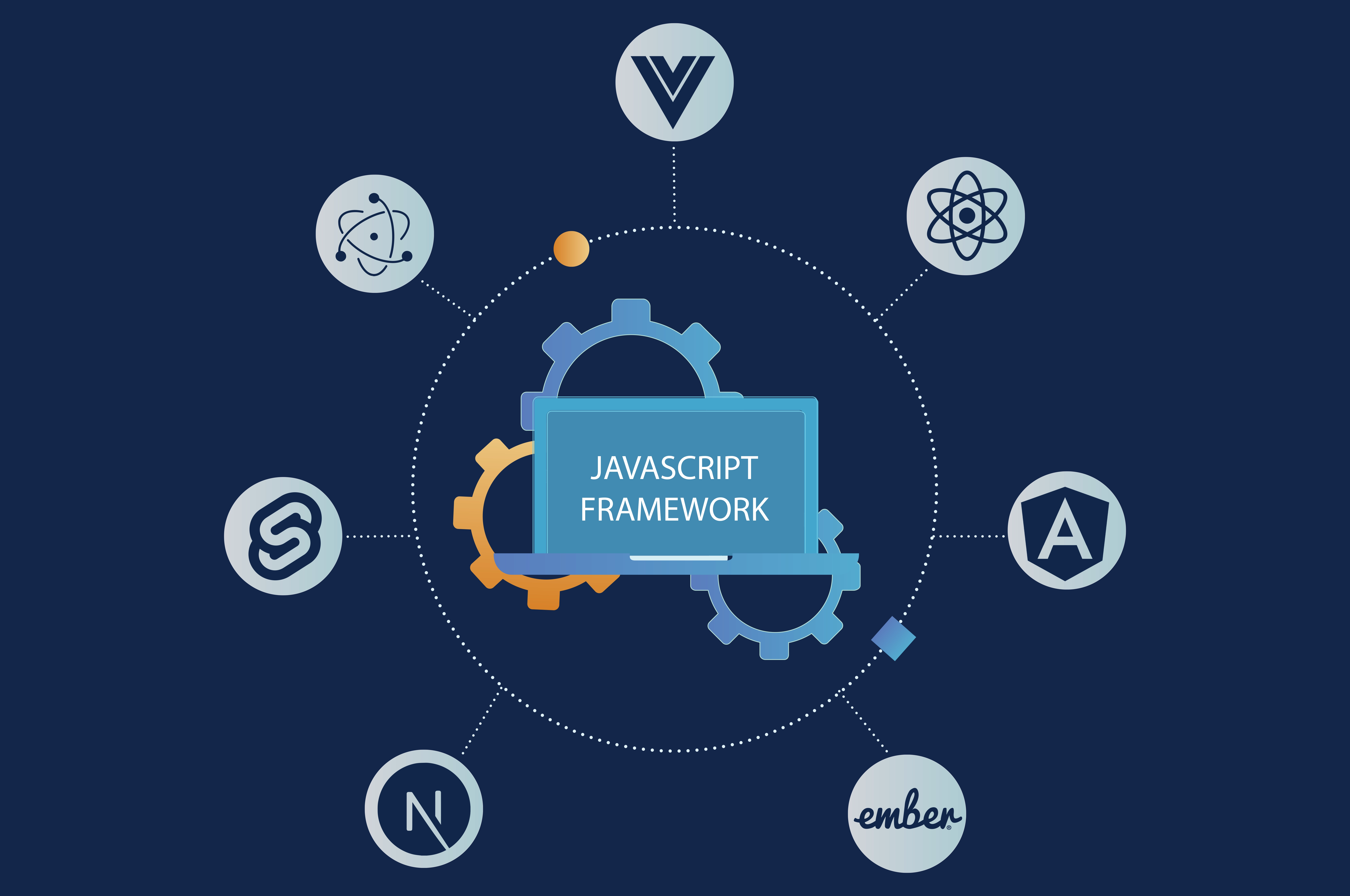
JavaScript Frameworks: Powering the Modern Web.
Introduction
The modern web has evolved far beyond static HTML pages. Today's users expect websites and applications to be fast, responsive, interactive, and accessible across every device. Meeting these expectations requires tools that simplify development while delivering exceptional performance. This is where JavaScript frameworks come into play.
JavaScript frameworks have transformed the way developers build web applications by providing reusable components, structured architecture, and efficient state management. Whether it's a simple landing page or a large-scale enterprise application, frameworks enable developers to create scalable, maintainable, and high-performing digital experiences.
From startups launching MVPs to global enterprises managing millions of users, JavaScript frameworks are the backbone of modern web development.
What Are JavaScript Frameworks?
A JavaScript framework is a collection of pre-written code, libraries, and development tools that provide a structured approach to building web applications. Instead of writing everything from scratch, developers use frameworks to handle common tasks such as:
- UI rendering
- Routing
- State management
- API integration
- Component creation
- Performance optimization
By reducing repetitive coding, frameworks allow developers to focus on building features that provide value to users.
Why JavaScript Frameworks Matter
Modern applications are becoming increasingly complex. Managing user interactions, real-time updates, animations, and responsive interfaces without a framework can quickly become difficult.
JavaScript frameworks help developers by:
- Speeding up development
- Improving code organization
- Encouraging reusable components
- Simplifying debugging
- Supporting scalable architectures
- Enhancing user experience
The result is faster delivery, cleaner code, and applications that are easier to maintain.
Popular JavaScript Frameworks
Several frameworks dominate modern web development, each designed for different needs.
React
React focuses on building interactive user interfaces using reusable components. Its virtual DOM enables fast rendering, making it ideal for dynamic applications.
Best for:
- Single Page Applications (SPAs)
- Dashboards
- Social media platforms
- E-commerce websites
Angular
Angular is a full-featured framework offering routing, dependency injection, forms, testing utilities, and more right out of the box.
Best for:
- Enterprise applications
- Large-scale business platforms
- Banking software
- Government portals
Vue.js
Vue combines simplicity with flexibility. It has a gentle learning curve while offering powerful capabilities for complex applications.
Best for:
- Startups
- Small and medium businesses
- Progressive web apps
- Interactive websites
Svelte
Svelte takes a different approach by compiling components into highly optimized JavaScript during build time instead of relying on a virtual DOM.
Best for:
- High-performance applications
- Lightweight web apps
- Mobile-focused interfaces
Next.js
Built on React, Next.js adds server-side rendering, static site generation, API routes, and performance optimization.
Best for:
- SEO-focused websites
- E-commerce platforms
- Blogs
- Content-heavy applications
Benefits of Using JavaScript Frameworks
Faster Development
Reusable components reduce repetitive work and speed up project delivery.
Better Performance
Modern frameworks optimize rendering, resulting in faster page loads and smoother user interactions.
Code Reusability
Developers can create components once and reuse them throughout the application.
Scalability
Applications can grow without becoming difficult to maintain.
Strong Community Support
Popular frameworks have active communities, extensive documentation, and thousands of third-party libraries.
Improved Developer Experience
Features like hot reloading, debugging tools, and automated testing improve productivity.
Real-World Applications
JavaScript frameworks power countless digital products, including:
- E-commerce platforms
- Social networking sites
- Streaming services
- Online banking
- Healthcare portals
- Project management software
- SaaS applications
- Educational platforms
Many of the world's most successful web applications rely heavily on JavaScript frameworks to deliver seamless user experiences.
Choosing the Right Framework
There is no universal "best" framework. The right choice depends on several factors:
Project Size
Large enterprise systems may benefit from Angular, while smaller projects often work well with Vue or React.
Performance Requirements
Applications demanding high performance may choose Svelte or optimized React architectures.
SEO Needs
Projects focused on search engine visibility often use Next.js.
Team Experience
Choosing a framework familiar to the development team can significantly reduce development time.
Community and Ecosystem
Frameworks with large ecosystems provide more plugins, tools, and learning resources.
Best Practices
To maximize the benefits of JavaScript frameworks:
- Build reusable components.
- Keep the application modular.
- Optimize performance with lazy loading.
- Write clean, maintainable code.
- Use proper state management.
- Follow accessibility guidelines.
- Regularly update dependencies.
- Write automated tests.
- Monitor application performance.
These practices help create reliable, scalable, and future-ready applications.
The Future of JavaScript Frameworks
The JavaScript ecosystem continues to evolve rapidly. Emerging trends include:
- Server Components
- Edge rendering
- AI-assisted development
- Partial hydration
- Islands architecture
- Better TypeScript integration
- Improved performance optimization
- WebAssembly integration
Future frameworks will continue focusing on delivering better performance while simplifying developer workflows.
Conclusion
JavaScript frameworks have revolutionized web development by making it easier to build interactive, scalable, and high-performing applications. They reduce development complexity, encourage reusable code, and help teams deliver better digital experiences faster.
Whether you're creating a startup MVP, a business dashboard, an enterprise platform, or a global e-commerce application, selecting the right JavaScript framework can significantly improve development efficiency and long-term maintainability. As the web continues to evolve, JavaScript frameworks will remain at the heart of modern application development, empowering developers to build the next generation of innovative digital solutions.
Frequently Asked Questions (FAQs)
1. What is a JavaScript framework?
A JavaScript framework is a collection of tools, libraries, and predefined code that helps developers build web applications more efficiently by providing structure and reusable functionality.
2. Why should developers use JavaScript frameworks?
Frameworks speed up development, improve code organization, enable component reuse, simplify maintenance, and enhance application performance.
3. Which JavaScript framework is best for beginners?
Vue.js is often considered beginner-friendly due to its simple syntax, while React is also a popular choice because of its extensive community support and learning resources.
4. What is the difference between React and Angular?
React is primarily a UI library focused on building interfaces, whereas Angular is a comprehensive framework that includes built-in features such as routing, dependency injection, and form handling.
5. Is JavaScript still relevant in 2026?
Yes. JavaScript remains one of the most widely used programming languages for web development, powering interactive websites, web applications, and many modern development frameworks.
6. Which framework is best for SEO?
Next.js is an excellent choice for SEO because it supports server-side rendering (SSR) and static site generation (SSG), improving page load speed and search engine visibility.
7. Are JavaScript frameworks suitable for enterprise applications?
Absolutely. Frameworks like Angular and React are widely used to build secure, scalable, and maintainable enterprise-grade applications.
8. Can JavaScript frameworks be used for mobile app development?
Yes. Frameworks such as React Native and Ionic allow developers to build cross-platform mobile applications using JavaScript technologies.
9. How do JavaScript frameworks improve performance?
They optimize rendering, reduce unnecessary DOM updates, support lazy loading, enable code splitting, and provide efficient state management to create faster applications.
10. What skills should developers learn alongside JavaScript frameworks?
Developers should understand core JavaScript (ES6+), HTML, CSS, APIs, Git, package managers, testing, TypeScript, responsive design, and basic backend concepts for a well-rounded skill set.










 2025. All rights reserved